



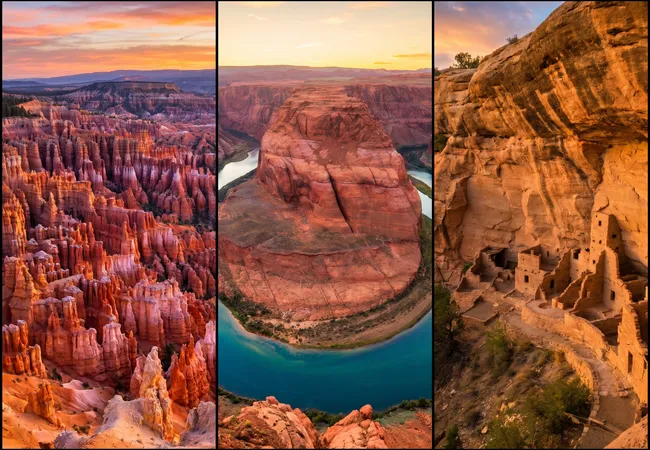
10 National Park Spots Our Writers Can't Stop Talking About

- These ten spots span parks from California to Ohio — the Shaka Guide app makes it easy to explore each one with turn-by-turn audio narration.
- Several of the best stops — like Great Basin and Bryce Canyon — reward visitors who get out of the car and hike. Don’t skip the trails.
- Arrive early at popular spots like Horseshoe Bend and Crescent Meadow to beat the crowds and get the most out of your visit.
America’s national parks are full of well-known highlights. But some of the most unforgettable moments happen off the beaten path — at a viewpoint that changes your perspective entirely, a trail you’ve walked since childhood, or a bend in a river that leaves you speechless.
We asked our own team to share the spots that genuinely stopped them in their tracks. The stops that made them fall in love with a park. The ones they still talk about years later.
No generic bucket lists here — just ten places, and the real stories behind why they matter.
In the meantime, here’s a look at ten must-see spots — each one hand-picked by a Shaka Guide team member who’s been there.
1. Dante’s View — Death Valley National Park, CA
 Matt Caracciolo
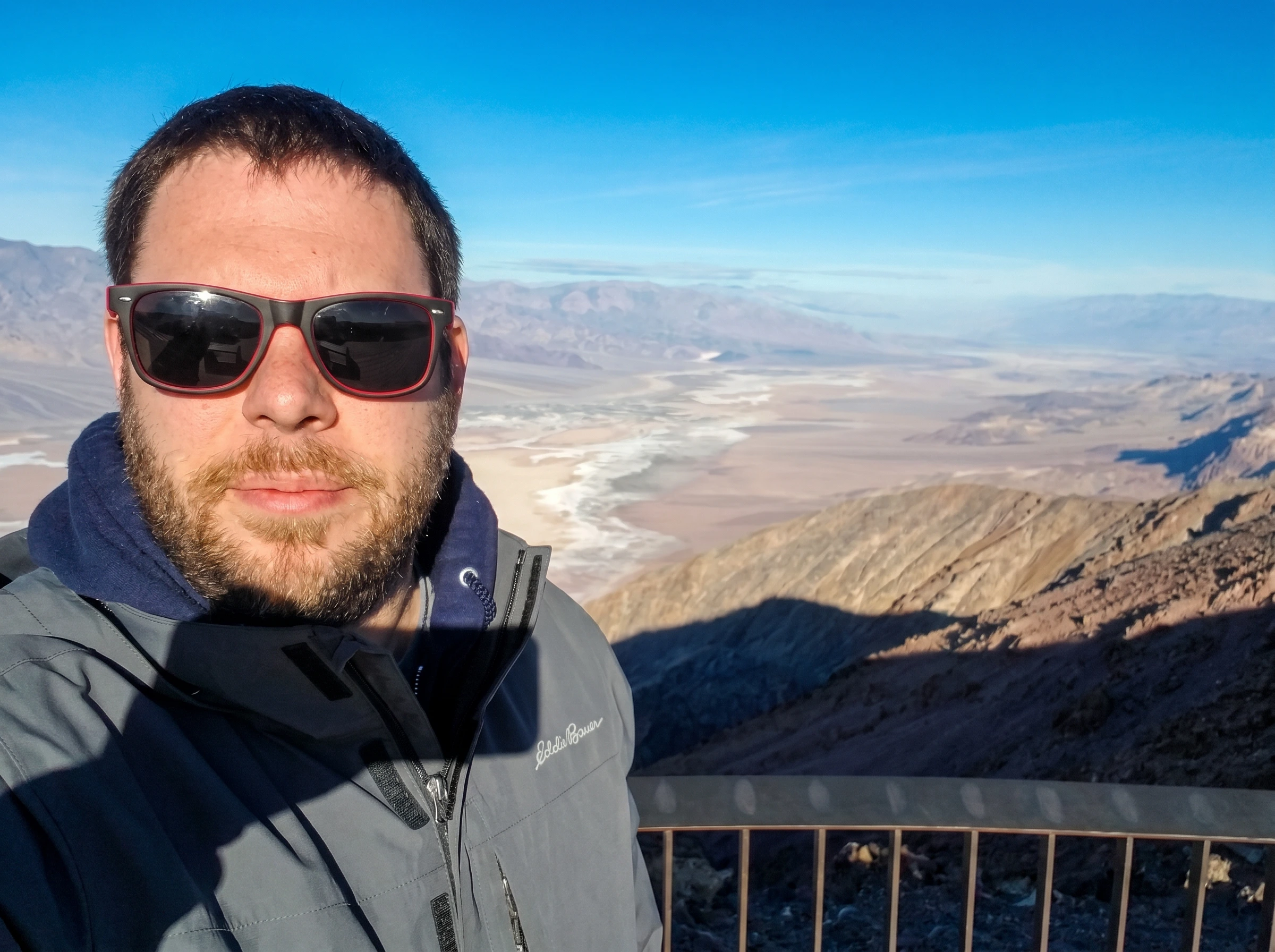
If your first impression of Death Valley left you underwhelmed, do not leave without making the drive up to Dante’s View first.
At 5,475 feet above the valley floor, this overlook delivers a perspective that makes everything click. The sheer scale of the place — the salt flats, the mountain ranges, the endless expanse of desert below — simply cannot be appreciated from ground level.
And for Star Wars fans: this is the very cliff where Obi-Wan Kenobi and Luke Skywalker stood overlooking Mos Eisley in the original film. George Lucas filmed that iconic shot right here.
Explore Death Valley with Shaka Guide’s self-guided audio tour.
Dante’s View is located off Dante’s View Road, approximately 25 miles from Furnace Creek. The road is paved but steep and winding — vehicles over 25 feet are not recommended. Open year-round, free with park admission. Best visited at sunrise or in the cooler morning hours.
2. Wheeler Peak — Great Basin National Park, NV
 Rachel Ennis
Great Basin is one of the most slept-on national parks in the country. Before visiting, plenty of people wonder why it even made the list. After visiting, those same people tend to become its most passionate advocates.
The key is simple: get out of the car and hike.
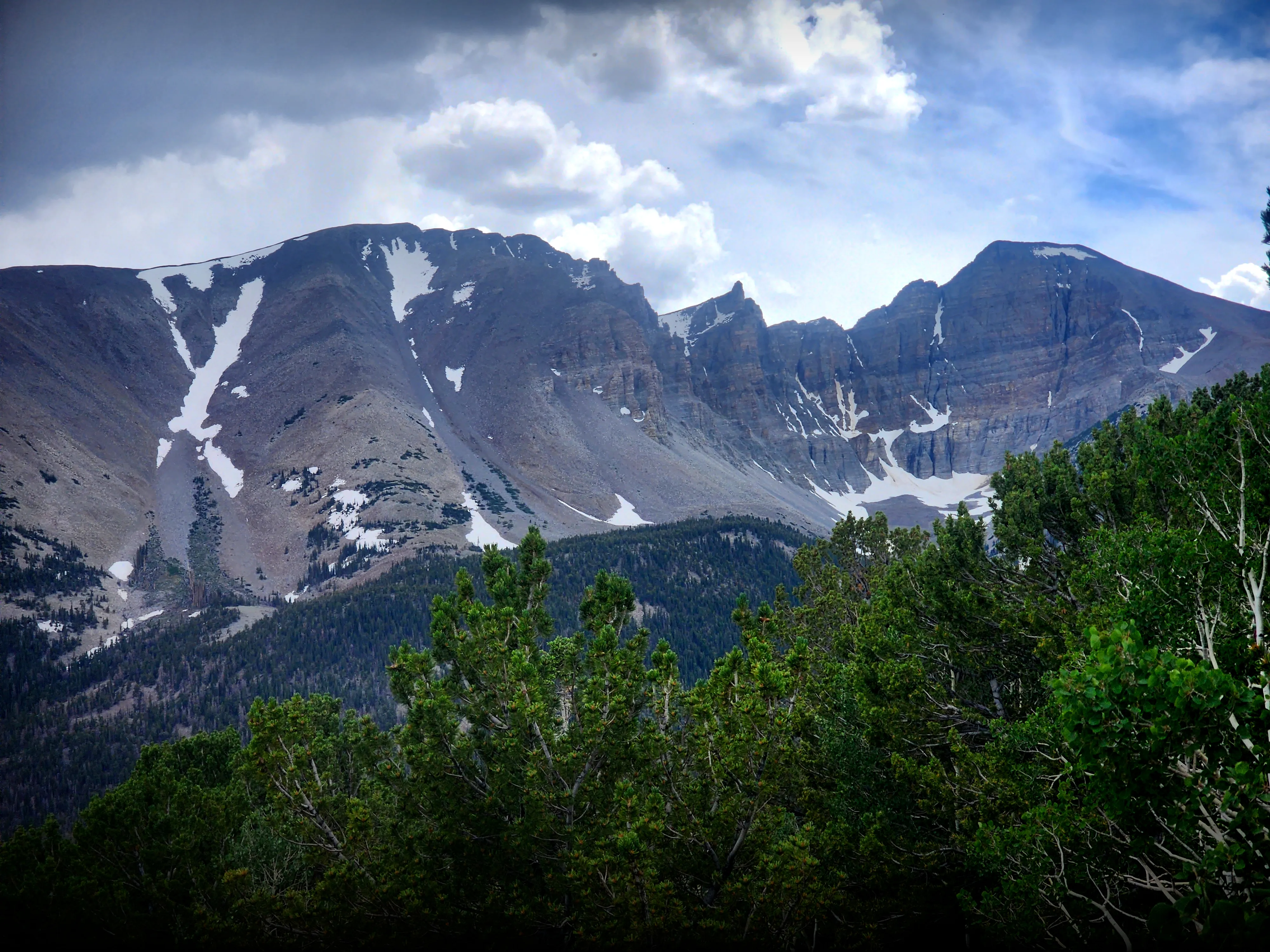
The road climbs from wide-open desert into dense montane forest, and as you hike higher into alpine terrain, the rewards stack up fast: mirror-like lakes, ribbons of purple and blue wildflowers, snowmelt streams, and some of the oldest living beings on Earth — ancient bristlecone pines, some over 4,000 years old.
At the very summit of Wheeler Peak, Nevada’s highest point at 13,063 feet, there’s nothing but barren talus, craggy ridgelines, and spinning clouds. It feels like the top of the world.
Explore Great Basin with Shaka Guide’s self-guided audio tour.
The Wheeler Peak Scenic Drive is 12 miles one-way from the visitor center to the trailhead. The Wheeler Peak Summit Trail is 8.6 miles round trip with 2,900 feet of elevation gain — strenuous but well worth it. The Bristlecone and Alpine Lakes Loop is a shorter, more accessible option. Free with park admission.
3. Horseshoe Bend — Page, AZ
 Shutterstock Image
No photograph prepares you for Horseshoe Bend.
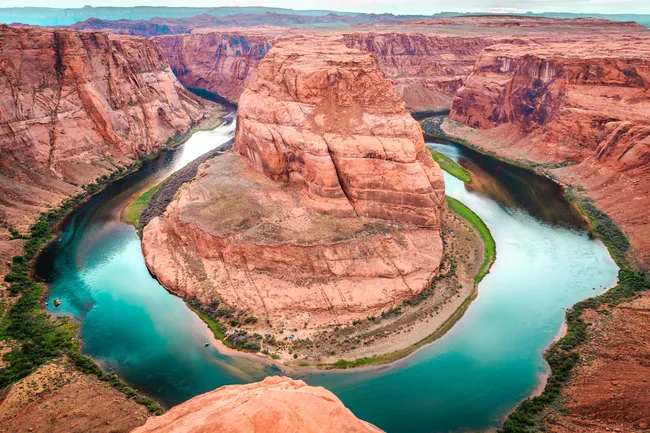
A 300-million-year-old meander — or bend — in the Colorado River, carved 1,000 feet below the rim of the canyon, this is one of those places where the word “jaw-dropping” isn’t hyperbole. It’s the only accurate description.
What makes it even better: you can explore multiple rocky perches along the rim, each offering a different angle on the depth, color, and scale of the canyon below. Plan to linger.
Explore Horseshoe Bend and the Page area with Shaka Guide’s self-guided audio tour.
The trailhead is located just off Highway 89 in Page, AZ. The hike to the overlook is 1.5 miles round trip with minimal elevation change. $10 per person day-use fee. Arrive early — the parking lot fills quickly, especially in summer and on weekends.
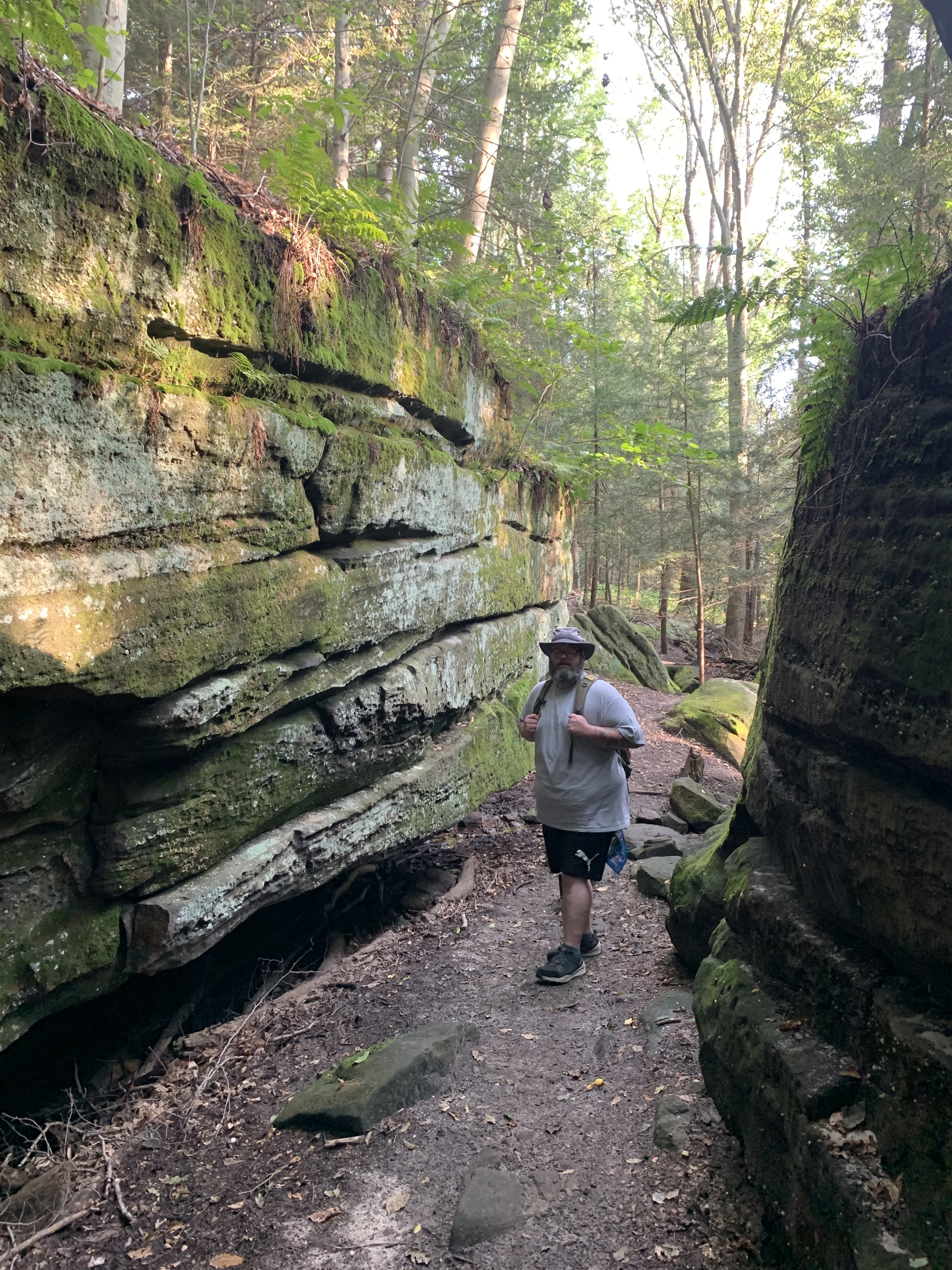
4. The Ledges Trail — Cuyahoga Valley National Park, OH
 Rayne Warne
The Ledges Trail is one of those trails that earns a permanent place in your memory — and keeps it, no matter how many other trails you walk afterward.
Moss-covered sandstone ledges tower over the path. Narrow gaps and caves cut through the rock, daring you to squeeze through. It’s the kind of trail that delights kids and adults equally, and that brings people back decade after decade.
One of our team members has been walking this trail for nearly 45 years, since childhood, and still measures every new trail against it.
Explore Cuyahoga Valley with Shaka Guide’s self-guided audio tour.
The Ledges Trail loop is approximately 2.2 miles and is rated easy to moderate. Trailhead parking is available at the Ledges Shelter area off Truxell Road. Free with park admission. Open year-round — the trail is especially beautiful in fall foliage season.
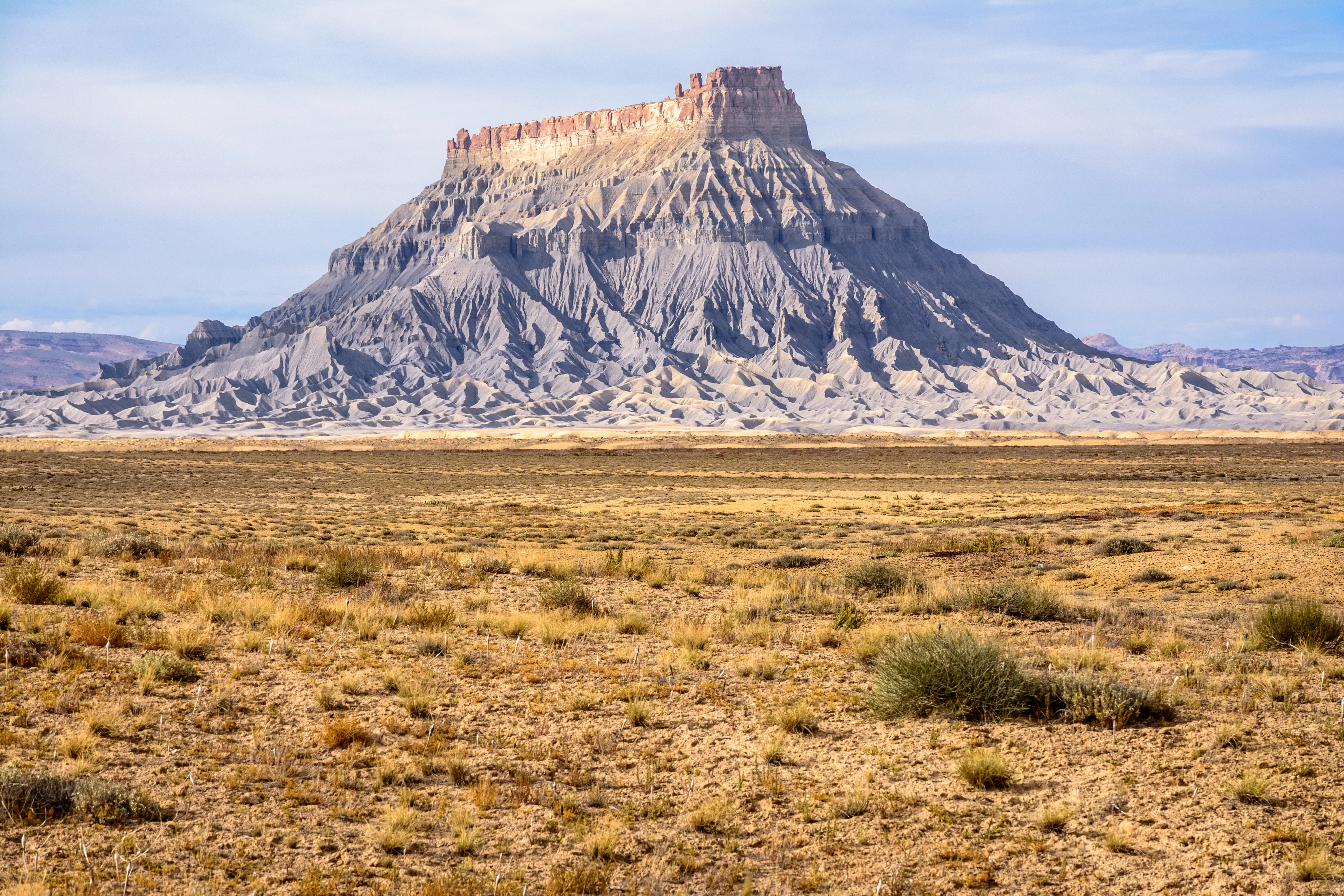
5. Factory Butte — Capitol Reef National Park, UT
 Rayne Warne
You’ll see Factory Butte from the highway before you even reach Capitol Reef — a lone butte of blue-purple Mancos shale rising from the flat desert plain, looking almost too surreal to be real.
Turn off the highway. Drive toward it. Get out of the car.
One of our guides was driving a rental car from Grand Junction when Factory Butte appeared on the horizon. They turned off onto a washboard dirt road, drove until the road disappeared (washed out by flooding the week before), got out, and stood there in the silence, marveling. They hadn’t even arrived at Capitol Reef yet — and they already knew they’d found their favorite stop of the entire tour.
Explore Capitol Reef with Shaka Guide’s self-guided audio tour.
Factory Butte is located off Highway 24 between Hanksville and the Capitol Reef entrance, on Bureau of Land Management land. A high-clearance vehicle is recommended for the dirt road approach. Free to access.
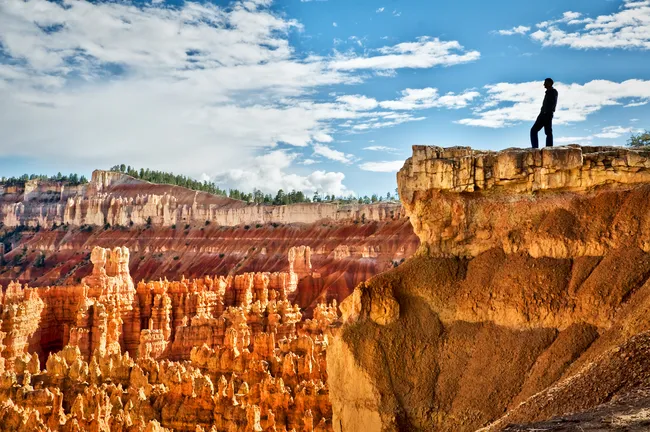
6. Sunset Point at Dusk — Bryce Canyon National Park, UT
 Shutterstock Image
Bryce Canyon is extraordinary at any hour — but stay until the light fades, and you’ll experience something genuinely magical.
As the sun sets at Sunset Point, the hoodoos shift from their daytime burnt orange to a surreal purple-blue. Stars begin appearing overhead. The air turns dry and cool. And if you start your descent into the canyon on the Navajo Loop Trail, you’ll feel completely immersed in another world.
One of our guides was ascending those switchbacks at dusk when they heard something unexpected: a hauntingly soft song echoing through the canyon, played on a wooden flute. At the top, they found a man with Southern Paiute ancestry who comes to this spot regularly to remember and honor his ancestors.
Some places leave a mark that never quite lifts.
Explore Bryce Canyon with Shaka Guide’s self-guided audio tour.
Sunset Point is located just off the main Bryce Canyon scenic drive, a short walk from the Sunset Point parking area. The Navajo Loop Trail is 1.3 miles round-trip from Sunset Point. Open year-round. $35 per vehicle for a 7-day park pass.
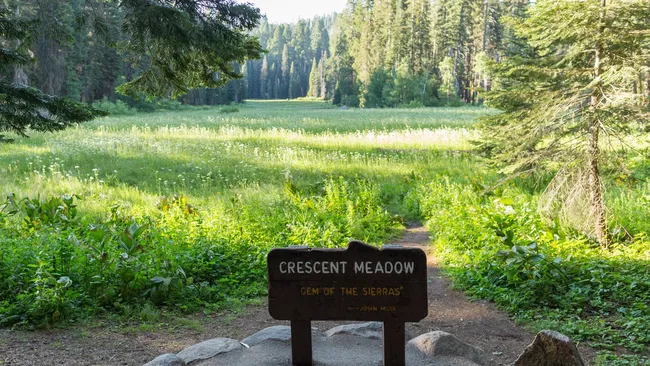
7. Crescent Meadow Boardwalk — Sequoia National Park, CA
 Matt Caracciolo
There are tall trees. And then there are giant sequoias.
Crescent Meadow’s boardwalk loop brings you right alongside some of the oldest and largest living things on Earth — trees that have been growing for over 1,000 years. The scale is genuinely difficult to comprehend until you’re standing next to one.
On a calm morning with few other visitors on the trail, the quiet here is the kind that recalibrates you. One of our guides remembers simply stopping mid-trail and staring upward in awe.
Explore Sequoia with Shaka Guide’s self-guided audio tour.
The Crescent Meadow Loop is approximately 1.8 miles and rated easy. Located at the end of Crescent Meadow Road in the Giant Forest area. $35 per vehicle for a 7-day park pass. Arrive early in summer — the Crescent Meadow Road parking lot fills quickly.
8. Loop Road Scenic Drive — Big Cypress National Preserve, FL
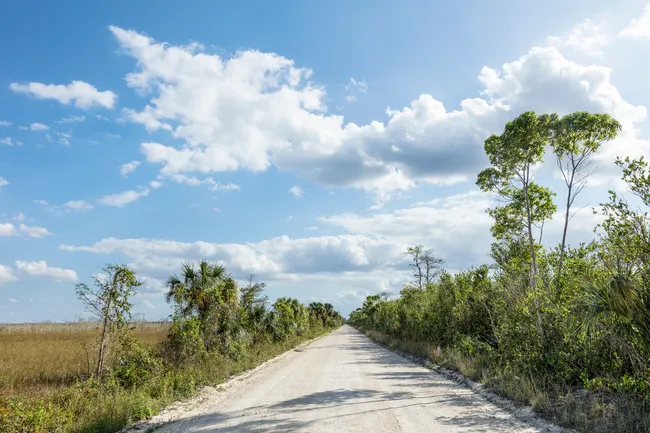 Myra Morehart
Go in expecting a swamp. Leave utterly converted.
Big Cypress National Preserve along Loop Road is lush, vibrant, and bursting with wildlife. On a single drive, you might spot snowy egrets wading in the water, roseate spoonbills in full pink plumage, great blue herons, and dozens of alligators basking along the roadside. The preserve is one of the most biodiverse ecosystems in North America, and Loop Road puts you right in the middle of it.
Visit in mid-February — before the bugs arrive — and you’ll practically have the preserve to yourself.
Explore Big Cypress with Shaka Guide’s self-guided audio tour.
Loop Road (County Road 94) runs 26 miles through the heart of Big Cypress. It’s unpaved in sections — a high-clearance vehicle is recommended after rain. Free to access. No services along the route, so bring water, snacks, and a full tank of gas.
9. Monument Valley Overlooks — Navajo Nation, AZ/UT
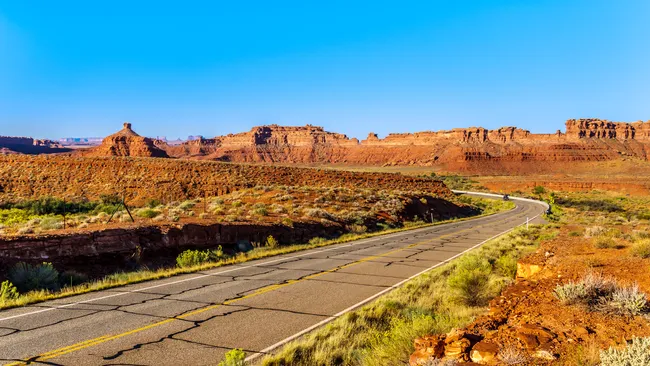 Shutterstock Image
Few landscapes on Earth are as immediately iconic as Monument Valley. The towering sandstone buttes — rising up to 1,000 feet from the desert floor — have appeared in countless films, photographs, and paintings, and yet nothing fully prepares you for seeing them in person.
The 17-mile Valley Drive loops through the heart of the monument, passing the West and East Mittens, Merrick Butte, and a dozen other formations. Whether you’re catching the first light of sunrise or staying for the vast panorama of the late afternoon, this is one of the most deserving views in America.
Explore Monument Valley with Shaka Guide’s self-guided audio tour.
Monument Valley Navajo Tribal Park is open daily. The Valley Drive dirt road is accessible by most passenger vehicles in dry conditions. Entrance fee is $20 per vehicle. For a deeper experience, guided Navajo-led jeep and horseback tours are available from the visitor center.
10. Mesa Verde Cliff Dwellings — Mesa Verde National Park, CO
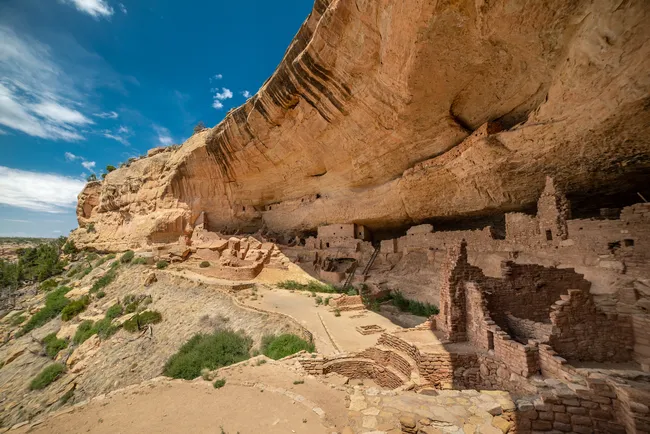 Shutterstock Image
Standing before a 700-year-old dwelling built directly into the face of a canyon wall does something to your sense of time.
The Ancestral Puebloans constructed entire communities in these alcoves — multi-story stone buildings with hundreds of rooms, ceremonial kivas, and towers — between roughly 1150 and 1300 CE. The scale of what they built, and how remarkably well it has survived, is one of the most profound things you can witness anywhere in the U.S. national park system.
Explore Mesa Verde with Shaka Guide’s self-guided audio tour.
Cliff Palace and Balcony House tours are ranger-led and require advance tickets (available at recreation.gov). Spruce Tree House is accessible via a short self-guided trail. $35 per vehicle for a 7-day park pass. Open year-round, though some cliff dwelling tours are seasonal.
FAQs
How do I choose which national parks to visit?
It depends on what you’re looking for. If you want dramatic desert landscapes and iconic viewpoints, the Southwest parks — Bryce Canyon, Capitol Reef, Death Valley, and Monument Valley — are hard to beat. For lush forests and ancient trees, Sequoia is extraordinary. For Midwest charm and accessible hiking, Cuyahoga Valley is deeply underrated.
The best starting point is simply downloading the Shaka Guide app and seeing which tours speak to you.
Do I need reservations to visit national parks?
Some parks and specific sites require advance reservations, especially during peak summer months. Horseshoe Bend’s trailhead can get crowded, and Mesa Verde’s cliff dwelling tours sell out fast — book those at recreation.gov ahead of time. Most other spots on this list are first-come, first-served, so arriving early is your best strategy.
What is the best time of year to visit national parks?
It varies by park. Death Valley is best in the cooler months (November–March) — summers are dangerously hot. Bryce Canyon and Capitol Reef are ideal in late spring (May–June) or early fall (September–October) to avoid peak crowds. Big Cypress is best in winter (December–February) before bug season. Sequoia and Great Basin shine in summer, when their higher elevations are fully accessible.
Are national park entrance fees worth it?
Absolutely — and if you’re planning to visit multiple parks in a year, the America the Beautiful Annual Pass ($80) covers entrance to all national parks and federal recreation areas for 12 months, which quickly pays for itself.
How does Shaka Guide work at national parks?
Shaka Guide is a self-guided GPS audio tour app. As you drive or hike, the app automatically triggers narrated stories, historical facts, and local tips based on your exact location — no cell service required once you’ve downloaded the tour. It’s like having a knowledgeable local guide riding along with you. Tours are available for all ten parks featured in this article.
Explore America’s National Parks with Shaka Guide
America’s national parks are some of the most spectacular places on the planet — and the best way to experience them is with stories that bring them to life.
Whether you’re standing at the edge of Dante’s View, hiking toward Wheeler Peak’s glacier, or watching the hoodoos of Bryce Canyon turn purple at dusk, Shaka Guide gives you the context, the history, and the local knowledge to make every moment richer.
With over 85 destinations across the U.S. and new tours added regularly, there’s always somewhere new to explore.

Ready to explore America’s national parks?
Take Shaka Guide’s Ultimate National Park Tour Collection — 48 tours, turn-by-turn audio, and the freedom to explore at your own pace.
Exploring a specific park?
Browse all of our National Park Tours — we cover over 54 parks and counting.
Still planning your trip?
Check out our National Parks guides for itineraries, know-before-you-go tips, and more.
Have questions?
We’re happy to help — email us at aloha@shakaguide.com.
Like this article? Share it on Pinterest!
 Death Valley National Park Tour



 TikTok





 to fuel your ride
